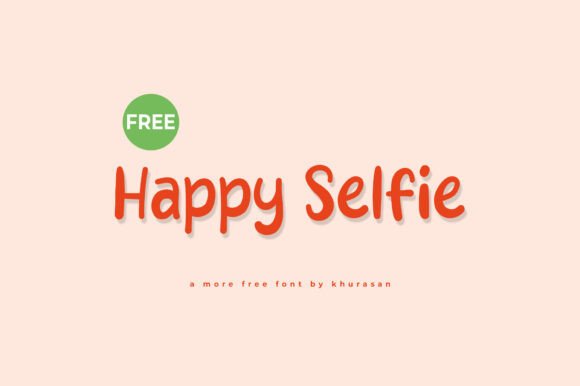
Happy Selfie Font for Modern Web Design
As a web designer, I'm always on the lookout for typefaces that balance creativity with readability. Happy Selfie stands out as a modern and cute handwritten font that brings warmth and personality to digital projects. It's ideal for websites where visual appeal meets functional design.
Visual Characteristics of Happy Selfie
Happy Selfie has a friendly, approachable feel with soft curves and natural variations in stroke width. Its handwritten style gives it a personal touch, making it perfect for creative projects that want to convey a sense of authenticity.
The font's character set includes a range of glyphs that mimic real handwriting, including ligatures and alternate characters. This adds subtle visual interest without compromising legibility, especially when used for short phrases or headings.
Using Happy Selfie in Web Layouts
When designing website headers or hero sections, using Happy Selfie can create an inviting atmosphere. It works well for landing pages that aim to build trust and connection with users. The font's playful nature is particularly effective for lifestyle brands, creative portfolios, and boutique online stores.
For call-to-action areas, Happy Selfie can be used sparingly to draw attention without overwhelming the user. Pairing it with a clean sans serif font for body copy ensures a balanced layout that supports both visual hierarchy and readability.
Practical Applications
- Creative Portfolio Sites: Use Happy Selfie for section headings and project titles to add a personal flair.
- Boutique Online Stores: Incorporate it into product banners or promotional graphics to enhance brand identity.
- Coaching Websites: Apply it to welcome messages or motivational quotes to create a warm, encouraging tone.
- Digital Ads: Utilize it for headlines in social media campaigns or banner ads to capture attention quickly.
Readability and Responsiveness
While Happy Selfie is a decorative display font, it's important to consider its performance on mobile screens. For smaller text sizes, ensure sufficient contrast against background colors. When using it on dark backgrounds, test different text weights to maintain clarity.
For responsive layouts, avoid using Happy Selfie for long paragraphs or body text. Instead, reserve it for headings, buttons, and short phrases where its unique style enhances rather than hinders the reading experience.
Font Pairing and Brand Identity
Happy Selfie pairs well with simple sans serif fonts like Helvetica or Arial for body copy. This combination creates a clear visual hierarchy, allowing the decorative font to stand out while maintaining overall readability.
For editorial-style websites, pairing Happy Selfie with a serif font such as Georgia can add sophistication. This is especially useful for blog headers or content sections that need to feel both professional and personable.
Licensing and Commercial Use
Before using Happy Selfie on client projects or online stores, verify that the font license allows commercial use. Many premium fonts require specific licenses for websites, digital templates, or brand assets. Always check the terms provided by Script Amp to ensure compliance.
Having access to multiple file formats (such as OTF, TTF, and WOFF) makes integrating Happy Selfie into web projects straightforward. Ensure that your chosen font package includes webfont support if you plan to use it across various platforms.
Conclusion
Happy Selfie is a versatile font that can elevate the look and feel of any digital project. Whether you're designing a landing page, a portfolio site, or a branded marketing asset, this font offers a unique way to express creativity while maintaining usability and readability.